Starship Kicks-Off Next-Generation Starlink


Andreas Rivera
Sep 30, 2026
Icon Time To Read2 min read

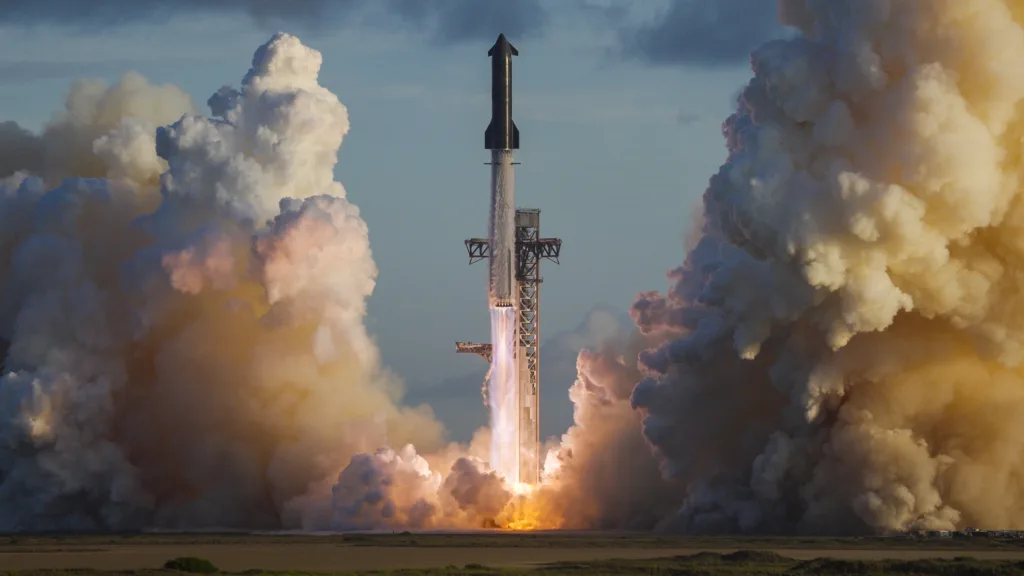
SpaceX successfully launched its Starship rocket into Earth orbit for the first time, even completing one of its primary missions of deploying next-generation Starlink satellites. | Image by SpaceX

SpaceX has taken a major step toward its many ambitions, including delivering gigabit satellite internet and becoming a dominant broadband provider worldwide. SpaceX launched its 14th Starship flight on September 28, successfully deploying 24 next-generation Starlink satellites that the company claims will greatly improve satellite internet performance.

The fully reusable Starship vehicle is central to Starlink's future roadmap. Engineered for mass deployment and rapid reusability, Starship is the only launch vehicle capable of carrying the heavier payloads required for Starlink's third-generation constellation upgrades. 

Supported by the “Mechazilla” launch tower, which is designed to catch the returning booster, SpaceX aims to achieve a cadence where Starship can launch, land, refuel, and fly again within hours. According to SpaceX President Gwynne Shotwell, the company envisions flying Starship up to 400 times over the next four years.


The next-generation (V3) satellites

As part of its mission to provide fiber-like speeds from space, SpaceX is shifting its focus toward a third generation of Starlink satellites. These V3 satellites are significantly larger than previous iterations and designed to transmit exponentially more data, offering up to 10 times the downlink capacity of the current generation. With an estimated one terabit of bandwidth per satellite, the new hardware will let Starlink support more ground terminals simultaneously at much higher speeds.

The V3 requires significantly more power, so it needs much larger solar arrays, making each satellite much heavier. Hence the need for Starship, which can carry those payloads that the current Falcon 9 cannot.

Starlink plans and pricing

Plan
Price
Download Speed
Latency
Equipment fee
Residential 100 Mbps*$55/mo.Up to 100Mbps30—40ms$349 or free rental
Residential 200 Mbps*$85/mo.Up to 200Mbps30—40ms$349 or free rental
Residential MAX$130/mo.Up to 400Mbps30—40ms$349 or free rental
Roam 100 GB$55/mo.Up to 260Mbps<99ms$199–$349
Roam 300 GB$80/mo.Up to 260Mbps<99ms$199–$349
Roam Unlimited$175/mo.Up to 260Mbps<99ms$199–$349

Top speeds not guaranteed during peak hours
*Plan not available in all regions

When will gigabit speeds arrive?

The 24 satellites launched are to be the first of a planned 100,000-craft constellation. Getting Starship to the point where it can successfully take off, deploy, land, and prep the next payload in a matter of hours is essential to meeting this goal within SpaceX's timeframe. Gigabit speed won't arrive overnight, but as the constellation build-out progresses, satellite network capacity will improve, allowing more Starlink terminals to connect without congestion.

For Starlink to compete with terrestrial internet providers, not just in rural settings, it needs excess capacity, especially if gigabit internet is the goal. How quickly it can achieve this depends on how fast it can develop Starship to become reusable and redeployable. 

SpaceX founder and CEO Elon Musk mentioned in an interview that he wants to launch Starship one to two times a week in 2027. That's not out of the realm of possibility, since the company has gotten the Falcon 9 to a near-weekly launch cadence. SpaceX expects to launch Starship more this year, including testing the capture of Starship's upper stage at the launch tower. Starship is also expected to launch SpaceX's planned orbital data center project, Starmind. It will also be pivotal to NASA's plans to return U.S. astronauts to the Moon.

24 satellites down, 99,976 to go.

Andreas Rivera
Written by
Andreas Rivera is a lifelong writer with a decade-spanning career in journalism and marketing. He comes to SatelliteInternet.com with several years of experience writing about business and technology. His passion for researching the latest advancements in tech, especially the now essential need for reliable internet access, fuels his goal of educating others about how these innovations affect and improve our everyday lives. When not researching and writing about SatelliteInternet.com, you’ll likely find him buried in a good book or enjoying the great outdoors with a fishing rod.