Amazon Leo Doubles Launch Rate In a Race to Get Started in 2026


Andreas Rivera
Mar 24, 2026
Icon Time To Read2 min read

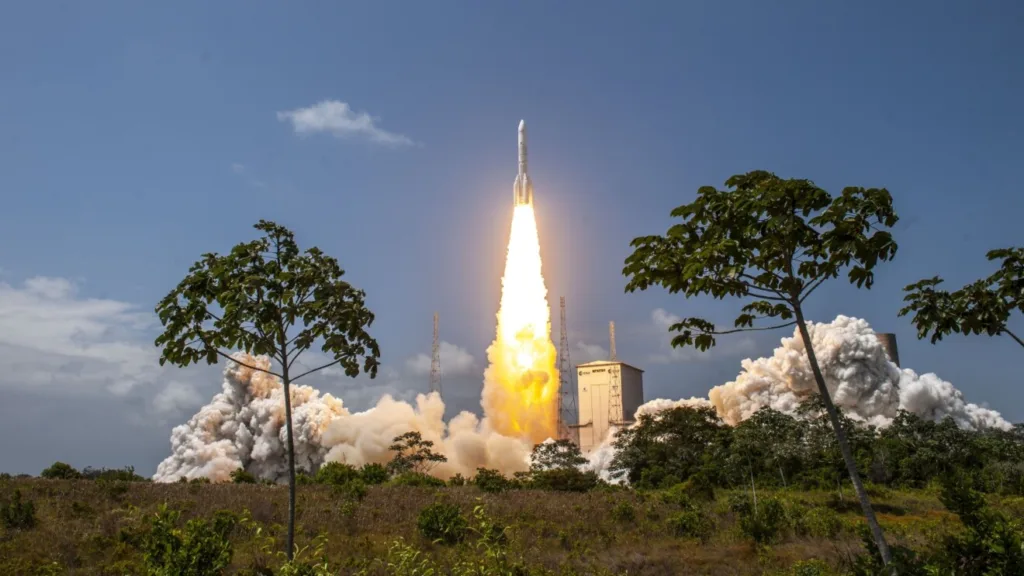
European launch company Ariane is carrying the largest batch of Amazon Leo satellites to date as the company ramps up efforts to build its constellation. | Image by Amazon

Amazon Leo, formerly known as Project Kuiper, is dialing up its efforts to get its satellite internet service up and running. The retail and tech giant announced plans to double its launch rate with 20 launches on the calendar. The move comes as little surprise, as the company approaches a July 2026 deadline to get at least 1,600 satellites in orbit. As of March, it has about 200 satellites in orbit. It's also faced criticism from both rivals and government officials.

Amazon's low-Earth-orbit satellite internet initiative is designed to provide fast, affordable broadband to unserved and underserved communities worldwide, rivaling Starlink. The planned constellation will consist of over 3,200 satellites working in tandem with a global network of antennas and ground stations.
Heavier rockets and squeezing in more satellites

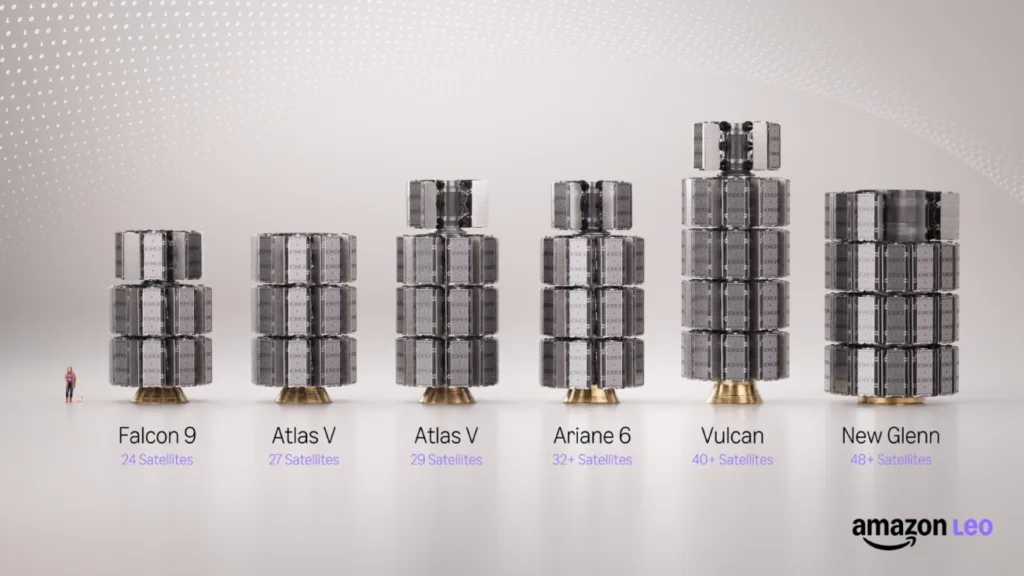
To double its launch cadence, Amazon is working with partners to secure more launches and fit more satellites onto its rockets. The company recently completed its first heavy-lift launch with Arianespace's Ariane 64 rocket, successfully sending 32 satellites into space. Future missions are slated to use Blue Origin's New Glenn, which can launch 48 satellites at a time, and the United Launch Alliance's Vulcan Centaur, which can launch 40 at a time. 

Even the older Atlas V rockets are getting an upgrade, allowing Amazon to squeeze 29 satellites onto the vehicle, making it the heaviest payload ever for the rocket.

Amazon Leo has been working with partners to fit more satellites aboard their rockets to launch as many as possible into orbit in 2026 and beyond. | Image by Amazon

This aggressive push is crucial not just for meeting its looming Federal Communications Commission (FCC) deadlines, but also for finally getting its internet service into the hands of consumers waiting for a viable alternative to SpaceX's Starlink

This initiative by Amazon comes after it appealed to the FCC to extend its deadline or exempt it altogether. SpaceX fired back, suggesting the FCC deny the extension and that Amazon go back to the drawing board on its rollout, so as not to interfere with its own ongoing build-out. It's been common for the two rivals to go back and forth, complaining to the FCC about each other's plans, but even the agency's Chairman, Brendan Carr, chimed in, pointing out that Amazon is severely behind on its schedule and should refrain from interfering with SpaceX. The agency has yet to make a decision on Amazon's request.

What this means for satellite internet this year

As Amazon scrambles to speed up production and launches, with the hope of starting commercial service sometime this year, it still has a long road ahead, but it has ambitions to go even further with second-generation satellites and even more missions in the future. Since its first launch in April 2025, Amazon has had 11 successful launches. However, compared to SpaceX, which had 14 Starlink launches scheduled in March alone, it's been a struggle for Amazon to keep up, a struggle it insists is due to circumstances beyond its control.

While Starlink currently dominates the market for rural and mobile internet, a fully operational Amazon Leo network promises much-needed competition, which usually leads to better pricing and hardware options for everyday users. Amazon has already teased impressive hardware, such as the ultra-portable Nano dish and standard residential terminals, promising speeds of up to 400 Mbps. If the company can actually pull off 20-plus launches this year without major delays, that promised late-2026 rollout for early adopters starts looking much more realistic, finally giving rural households, RVers, and nomads another powerful way to stay connected.

Andreas Rivera
Written by
Andreas Rivera is a lifelong writer with a decade-spanning career in journalism and marketing. He comes to SatelliteInternet.com with several years of experience writing about business and technology. His passion for researching the latest advancements in tech, especially the now essential need for reliable internet access, fuels his goal of educating others about how these innovations affect and improve our everyday lives. When not researching and writing about SatelliteInternet.com, you’ll likely find him buried in a good book or enjoying the great outdoors with a fishing rod.