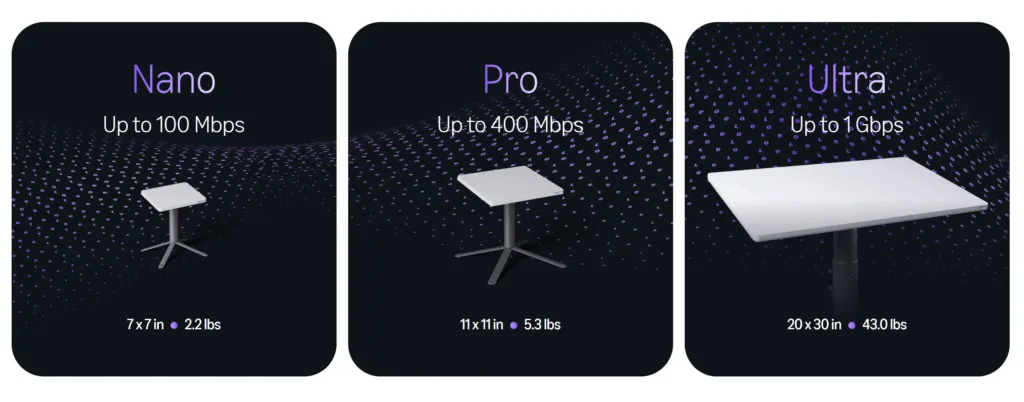
A rendering of the Amazon Leo Nano dish, a direct competitor to Starlink's popular Mini dish for portable satellite internet. | Image by Amazon
For a long time, Starlink has been the only name in town for high-speed satellite internet on the go. If you wanted to get online from the side of a mountain or the middle of the desert, SpaceX was your only real option. But that's about to change.
Amazon recently rebranded its "Project Kuiper" satellite venture as Amazon Leo, and it is coming out swinging with hardware specifically designed to take down the Starlink Mini. The most portable of the bunch is the Amazon Leo Nano, a tiny dish that makes the already-small Starlink Mini look a little bulky.
Since Amazon Leo is slated to launch sometime in late 2026, we haven't gotten our hands on the Nano just yet. However, we have plenty of specs to compare against the Starlink Mini, which we've reviewed over several months. Here is how these two portable heavyweights stack up.
Portability and Design: The "Laptop" vs. the "Book"
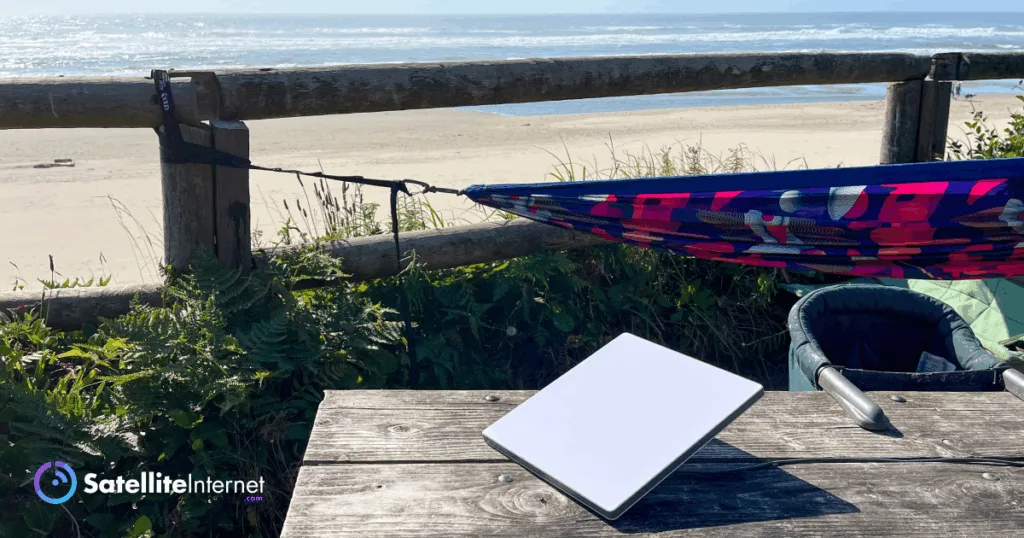
The Starlink Mini is usable wherever there are clear skies, and it fits easily with the rest of your travel gear. | Photo by Bison Messink
When Starlink released the Mini, it changed the game for backpackers and nomads. It's roughly the size of a laptop and fits easily into a standard rucksack. But Amazon is aiming for even more portability.
-
Starlink Mini: Measures roughly 11.75 by 10.2 inches. It's thin, lightweight (about 2.5 lbs), and features a built-in Wi-Fi router, meaning you only need the dish and a power source to get online.
-
Amazon Leo Nano: Measures just 7 by 7 inches. Amazon claims this is the most portable high-speed satellite dish ever made. It's significantly smaller than the Mini—more like a hardcover book than a laptop.
The takeaway: If pack space is your absolute priority, the Leo Nano has the edge. However, the Starlink Mini's built-in router is a huge convenience that Amazon will have to match if it wants to win the "travel light" crown.
The Amazon Leo Nano is slightly smaller than the Starlink Mini, but may trade speed for the small design. | Image by Amazon
Performance: Real-World vs. Projections
Speed is where the rubber meets the road. Starlink has the advantage of a massive, established constellation, while Amazon is still in the "launching" phase.
Starlink advertises speeds up to 100 Mbps for the Mini, but in our hands-on testing, we've regularly seen it hit between 100 and 200 Mbps, and sometimes beyond. It's surprisingly efficient for such a small device.
Amazon is projecting speeds up to 100 Mbps for the Nano. While that's plenty for 4K streaming and video calls, it remains to be seen if Amazon can deliver on those speeds once thousands of users are on the network.
One area where Amazon might have an advantage is its use of Optical Inter-Satellite Links (OISL). This "mesh network in space" is designed to reduce latency and keep data moving fast by bouncing it between satellites before it even hits a ground station.
Price and Availability: The Wait and See
This is the biggest hurdle for Amazon Leo. You can buy a Starlink Mini today, but you'll have to wait at least a year for a Nano. The hardware currently costs around $249–$299 (though prices have fluctuated). Service plans for "Roam" users start at $50/mo for a 100GB regional plan, or $165/mo for unlimited data.
Pricing hasn't been officially announced, but Amazon has promised it will be "competitively priced." Given Amazon's history of subsidizing hardware to get people into its ecosystem (think Kindle or Fire TV), we wouldn't be surprised if the Nano launched at a lower price than the Starlink Mini.
Starlink plans and pricing
Plan | Price | Download Speed | Latency | Recommended Equipment fee |
| Residential 100 Mbps* | $50/mo. | Up to 100Mbps | 30—40ms | $349.00 |
|---|
| Residential 200 Mbps* | $80/mo. | Up to 200Mbps | 30—40ms | $349.00 |
|---|
| Residential MAX | $120/mo. | Up to 400Mbps | 30—40ms | $349.00 |
|---|
| Roam 100 GB | $50/mo. | Up to 260Mbps | <99ms | $249.99–$349.00 |
|---|
| Roam Unlimited | $165/mo. | Up to 260Mbps | <99ms | $249.00–$349.00 |
|---|
Top speeds not guaranteed during peak hours
*Plan not available in all regions
Should you wait for Amazon?
If you need internet for your RV or backpacking trip right now, the Starlink Mini is an incredible piece of tech that won't disappoint. It's reliable, fast, and easy to power with a portable battery bank.
However, if you can wait until 2026, Amazon Leo Nano might be the better value. Its smaller footprint and potential integration with the Amazon ecosystem (and perhaps even Prime discounts) could make it the ultimate choice for casual travelers.
Our advice? Get Starlink now if you need it, but keep a close eye on Amazon. Competition is finally coming to the satellite world, and that usually means better prices for all of us.



 3 min read


 Your Privacy Choices