
Andreas Rivera
Jun 22, 2026
Icon Time To Read6 min read

Getting away from the city and exploring the beautiful, rugged places of the U.S. has long been a national pastime. Whether in an RV, a van, or a tent, camping used to mean becoming completely disconnected from most of the world, but now it's become easier than ever to bring the World Wide Web along for the ride. Now more than ever, it's become harder to disconnect, whether for reasons of safety or entertainment.

So how are campers connecting, why are they connecting, and what are the biggest obstacles for those who wish to stay connected? We examine the different types of traveling internet users, including weekend warriors, seasonal RVers, and even those living the nomadic lifestyle.

It's clear that the safety/emergency use case is loud and consistent. Unprompted, dozens of respondents mentioned the internet primarily as a safety tool — not entertainment. Phrases like "dead zones are scary," "it's for emergencies," and "some places where safety is not guaranteed," were common among respondents.
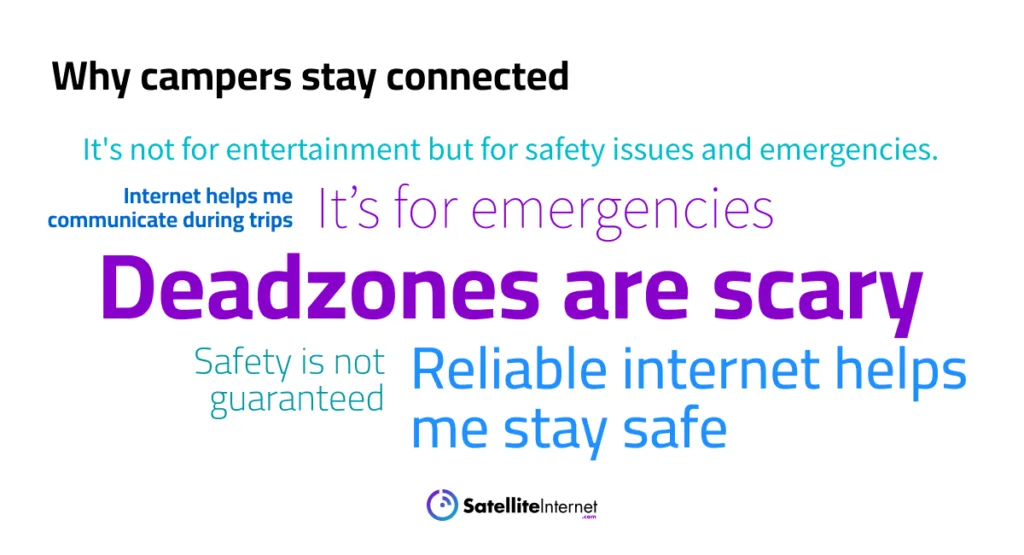
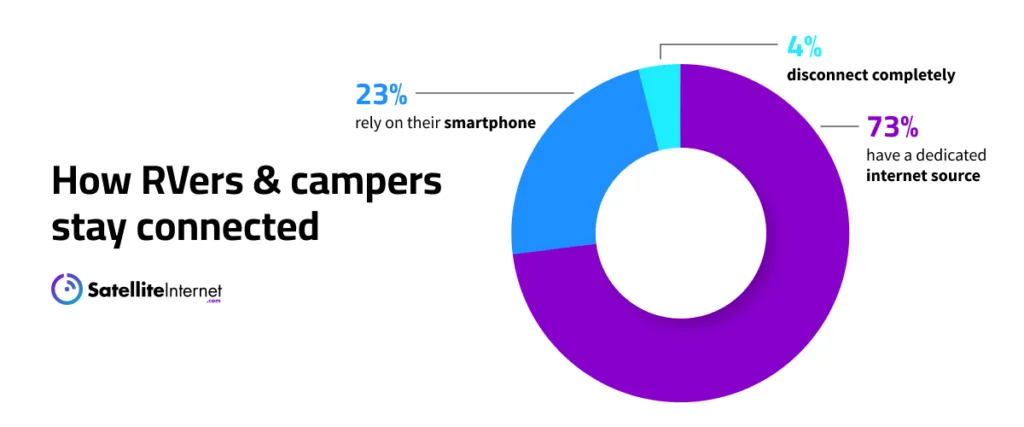
Image by Kayla Fischer for SatelliteInternet.com

Next to that, however, the performance-price frustration is also on the mind. Respondents who have tried internet solutions while camping often remarked that the price wasn't worth it for the quality of service. 

How important is staying online?

According to a 2026 SatelliteInternet.com survey, 73 percent of RVers and campers stay connected, whether through a dedicated internet source, with 23 percent just bringing along a smartphone, and the remaining 4 percent choosing to completely disconnect. 

Image by Kayla Fischer for SatelliteInternet.com

The Why?

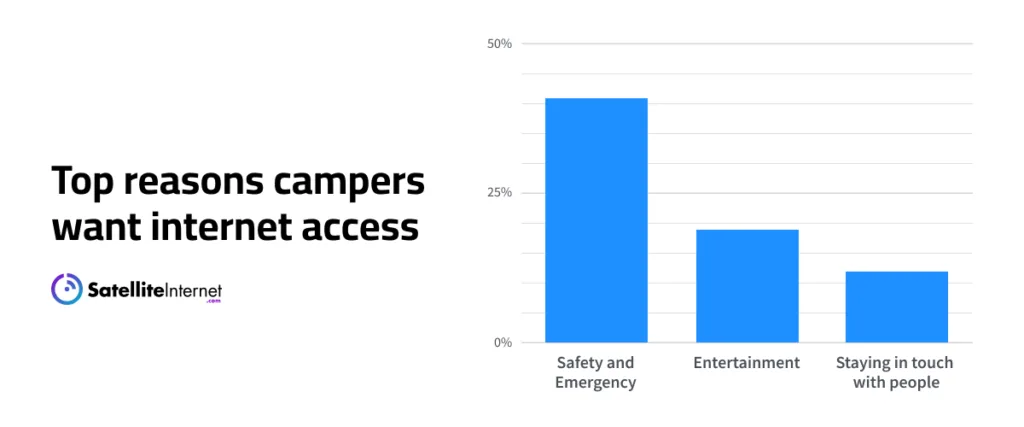
When camping or RVing, the top reasons people want internet access are:

  • Safety & Emergency - 41%
  • Entertainment - 19%
  • Staying in touch with friends and family - 12%

Image by Kayla Fischer for SatelliteInternet.com

It's clear that a majority of RVers and campers want some kind of internet access, but not everyone is so quick to invest in it. Excluding those who prefer to disconnect completely, the top reasons people aren't adopting high-speed internet solutions for travel are that many feel that their smartphone is all they need (27%), but the other big deterrent cited in the survey is cost (20%). About a third of non-users could change their mind if the right price comes at the right time.

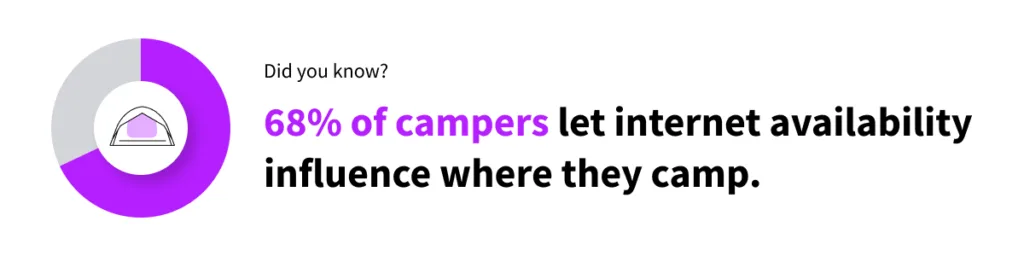
With 68 percent letting internet availability influence where they camp, travelers rely primarily on their smartphone data, but nearly half also tap into campground Wi-Fi, and a third use portable hotspots. Most are piecing together whatever signal they can find.

The dead zone dilemma

Despite advancements in mobile networks, nearly three in four campers (73 percent) lose internet access entirely while on the road. For modern adventurers, dead zones are not an occasional inconvenience—they are the norm. When analyzing the top three pain points for travelers, performance issues and cost dominate the conversation:

  • Unreliable signals: 28% struggle with connections that drop unexpectedly.
  • Sluggish speeds: 21% are plagued by slow load times in rural or remote areas.
  • Cost: 20% cite high monthly costs as their primary frustration.

The cost of disconnection: Ruined trips and safety risks

The impact of this poor connectivity goes far beyond missing a few emails. For many, it actively dictates travel plans and cuts adventures short. More than 1 in 4 campers report packing up and heading home early due to inadequate internet access.

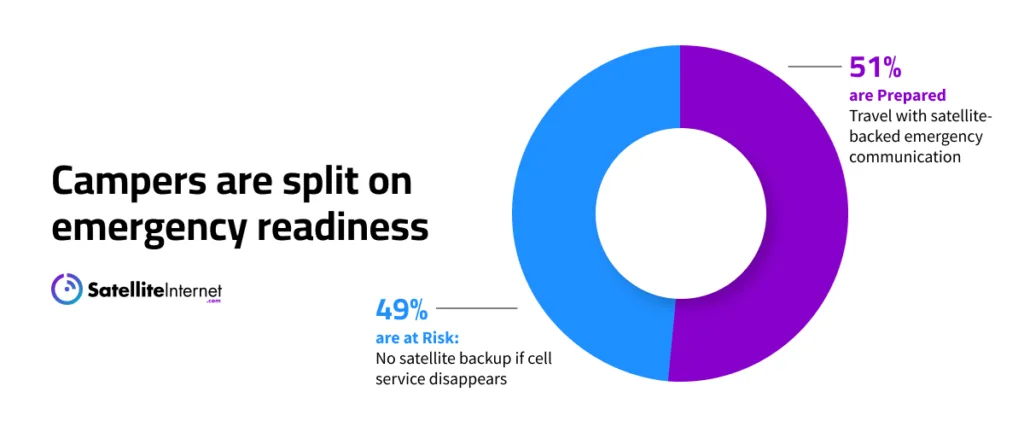
More alarmingly, this lack of connectivity poses a severe, systemic safety risk. While 51 percent of campers travel with some form of satellite-backed emergency communication, 49 percent are dangerously unequipped for the realities of remote travel. For nearly half of all campers, a single dead zone means they are entirely unreachable—with no satellite device, no backup plan, and no way to call for help in an emergency.

Room for improvement in a connected outdoors

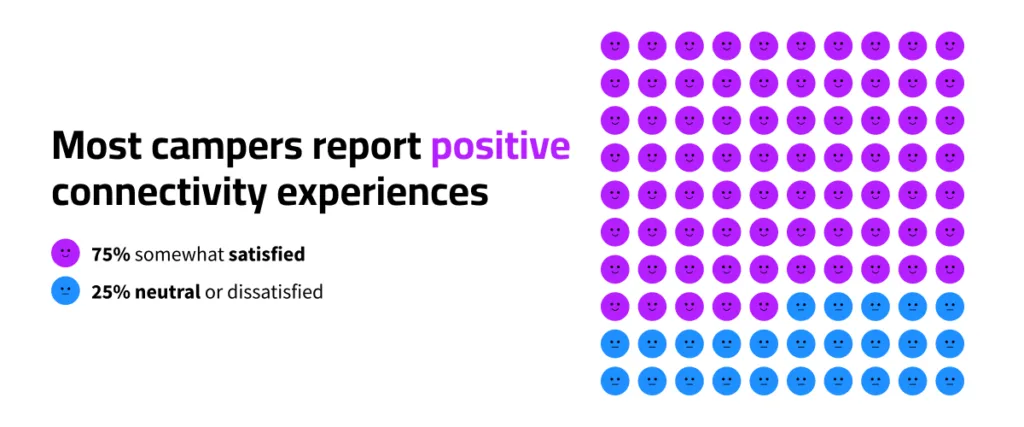
Despite these glaring gaps in performance and safety, traveler sentiment is surprisingly mixed. Currently, 75 percent of campers report being at least somewhat satisfied with today's travel internet options.

However, that leaves 1 in 4 remaining neutral or dissatisfied. When combined with the fact that performance and high costs are two of the top three complaints, this signals a clear gap in the market. The outdoor connectivity space has real room for improvement, paving the way for solutions that can finally balance reliable speed, safety, and affordability for the modern traveler.

The economics of RV internet

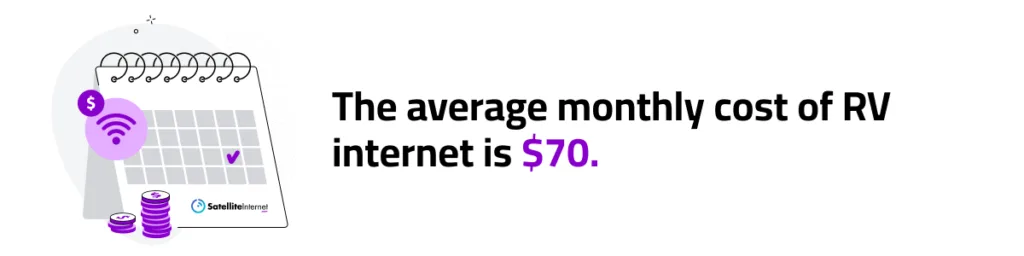
While 25 percent of campers do not pay for dedicated travel internet, the remaining majority clearly view connectivity as a necessary travel expense. Among those who do pay for a dedicated service, the average monthly spend is roughly $70.

Image by Kayla Fischer for SatelliteInternet.com

To put that into perspective, $70 per month is remarkably close to what the average American pays for a high-speed, reliable home broadband connection. The willingness to pay home-internet prices for mobile connectivity underscores just how critical reliable access has become on the road.

For some, a single connection isn't enough to ease their connectivity anxiety. While 66% of paying users stick to a single provider, 26 percent go a step further and pay for more than one internet service simultaneously just to ensure they have a viable backup option when their primary signal fails.

A performance gap, not a price gap

Despite this significant financial investment, customer satisfaction remains a sticking point. Even though travelers are paying premium, home-equivalent prices, more than 1 in 3 say their service is not worth the cost or are completely lukewarm on the value it provides.

This dissatisfaction reveals a crucial insight about the current outdoor connectivity market: the issue isn't that campers are unwilling to pay. Rather, they are frustrated by paying top dollar for unreliable, sluggish service. The outdoor industry is facing a massive performance gap, not a price gap—and travelers are eagerly waiting for a solution that actually delivers for the price.

How are campers getting online?

There are only a handful of different solutions for high-speed internet when you're hitting the road to a campground or National Park. However, there are still more choices than there were 10 years ago, including ones that make it feel like you're taking your home internet with you. 

Solutions campers have used

Verizon mobile hotspot — 31%

T-Mobile Home Internet — 25%

AT&T mobile hotspot — 24%

Starlink — 18%

T-Mobile AWAY — 14%

Apple Emergency SOS — 8%

Garmin inReach — 5%

SPOT Messenger — 2%

Advances in satellite and wireless technologies have made it possible to incorporate the digital comforts of home into your motorhome or tent. At the very least, even if a solution doesn't let you stream your shows, it's enough to call for help in an emergency situation.

The Starlink conversation

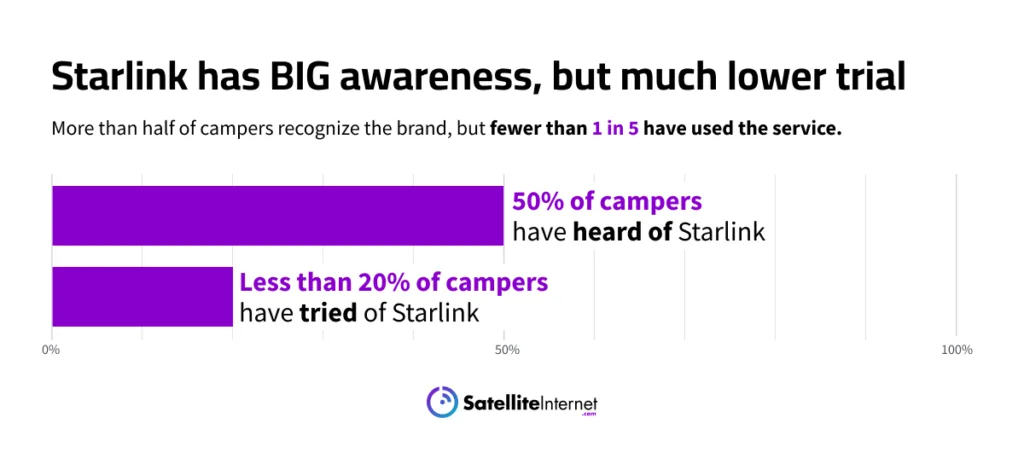
Starlink currently dominates the conversation around remote internet, boasting the largest awareness-to-usage gap in the industry. While more than half of all campers have heard of the satellite internet service, fewer than 1 in 5 have actually tried it.

This disparity highlights a massive conversion opportunity currently being left on the table. The hesitation is likely driven by the high upfront costs of the hardware and the friction involved in setting up and mounting the dish. However, the desire is clearly there. When looking ahead to their next trip, campers rank their top connectivity wish list as follows:

  1. Starlink (25%)
  2. Satellite built into their phone (22%)
  3. Carrier hotspot plans (20%)

The safety device blind spot

While entertainment and remote work drive the desire for broadband, emergency communication is a matter of life and death—yet safety devices suffer from a more fundamental problem. They aren't just underused; they are barely known.

Dedicated emergency satellite communicators like Garmin inReach and SPOT have surprisingly low visibility among campers. Awareness sits below 17 percent for Garmin inReach and below 8 percent for SPOT. This indicates that the barrier to adoption for these critical safety tools isn't just cost or setup complexity—it's a basic lack of awareness. Campers can't adopt safety technology they don't know exists, revealing a crucial need for better education around emergency preparedness on the road.

Methodology

This survey was conducted online via Pollfish among 1,000 Americans who identified as active campers or RVers. Respondents were screened to ensure they had recent, hands-on camping or RVing experience — excluding those whose outdoor travel is limited to hotel or motel stays. Data was post-stratified to reflect a representative sample of the U.S. camping population across age, gender, and geography. All figures referenced are drawn from post-stratified results unless otherwise noted.

Andreas Rivera
Written by
Andreas Rivera is a lifelong writer with a decade-spanning career in journalism and marketing. He comes to SatelliteInternet.com with several years of experience writing about business and technology. His passion for researching the latest advancements in tech, especially the now essential need for reliable internet access, fuels his goal of educating others about how these innovations affect and improve our everyday lives. When not researching and writing about SatelliteInternet.com, you’ll likely find him buried in a good book or enjoying the great outdoors with a fishing rod.