

Beyond the Megabit: Why Latency Defines the Rural Internet Experience in 2026


Andreas Rivera
Mar 11, 2026
Icon Time To Read3 min read

In the early days of the digital age, we were obsessed with "speed." We wanted to know how many megabits per second our providers could squeeze through the lines. But as we move through 2026, the conversation has shifted. Whether you’re trying to land a remote job from a cabin in the Northwoods or you’re a rural gamer tired of seeing "Connection Lost" on your screen, you’ve likely realized that speed is only half the battle. The other half—and arguably the more important half for modern applications—is latency.

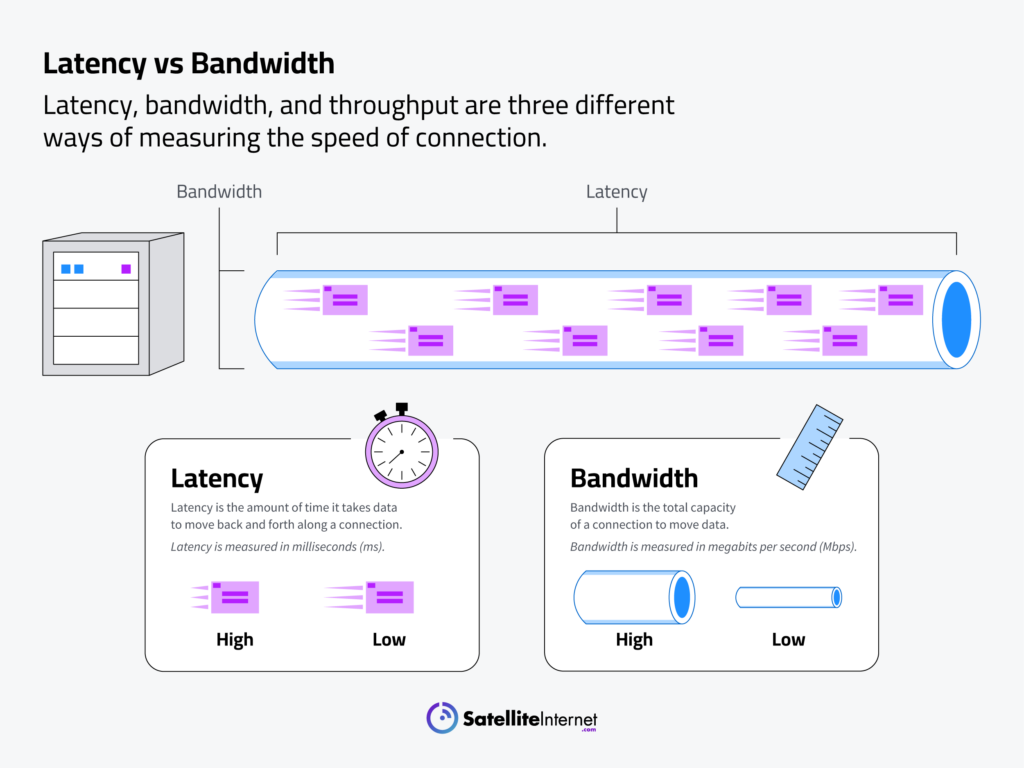
Latency, often called "ping," is the heartbeat of your internet connection. It represents the literal time it takes for a signal to travel from your device to a server and back again. While bandwidth tells you how much data can fit through the pipe, latency tells you how fast that data can actually make the round trip. In a world where we rely on real-time video conferencing, cloud-based productivity tools, and low-latency gaming, a high-speed connection with high latency feels like driving a Ferrari through a series of endless stoplights. You might have the power, but you aren’t getting anywhere quickly.
What types of internet connections have low latency?

Connection type
Download speeds
Latency

Fiber

50–2,000+ Mbps

8–15 ms

Cable

15–1,000 Mbps

18–40 ms

Fixed 5G

20–400 Mbps

30–75 ms

LEO Satellite (Starlink)

20–400 Mbps

25–50 ms

GEO Satellite (Legacy)

12–100 Mbps

600–700+ ms

Wired connections generally have the lowest latency, with fiber being the lowest of them all. Satellite internet has extremely high latency, due to the distance between satellites and the surface of the Earth. (Though low-Earth orbit satellite constellations like Starlink could offer much lower latency connections.)

Other wireless technologies generally have more latency than wired connections, but still manage to keep it below 100 ms, which is good for activities like online multiplayer games. 5G connections might even be able to get latency as low as many wired connections, making it another good option for playing online games.

In internet terms, latency and bandwidth are the two factors that determine a connection's speed. | Image by Allaina Jefferys

The physics of the rural digital divide

For those of us living outside the reach of urban fiber optics, the latency struggle has historically been a matter of physics. Traditional geostationary (GEO) satellites, like those operated by Viasat and HughesNet, sit roughly 22,000 miles above the Earth. Even at the speed of light, that’s a long way for a signal to travel. By the time your click reaches the satellite, bounces to a ground station, finds the server, and returns the same way, nearly 600 to 700 milliseconds have passed. This is why, despite decent download speeds, old-school satellite internet often feels "floaty" or unresponsive.

However, the landscape in 2026 is radically different thanks to the maturity of Low-Earth Orbit (LEO) constellations. Systems like Starlink and the newly launched Amazon Leo (formerly Project Kuiper) operate at altitudes as low as 300 miles. By bringing the "cell towers in the sky" closer to the ground, these providers have slashed latency to a median of 25 to 50 milliseconds. For rural residents, this isn't just a technical upgrade; it's the difference between being a spectator of the digital economy and being a participant. You can finally lead a Zoom meeting or play a fast-paced shooter without the "rubber-banding" that used to plague rural life.

Why latency still matters in a high-speed world

You might wonder why we still care about a few dozen milliseconds. The reason lies in the way modern software is built. Today’s web pages are no longer simple text files; they are complex puzzles made of hundreds of small requests. Every time you load a site, your browser asks the server for images, scripts, and fonts. If your latency is high, each of those requests takes a fraction of a second longer to resolve. These delays stack up, turning a "fast" 200 Mbps connection into a sluggish browsing experience.

As someone who spends a fair amount of time researching how these tech advancements affect our daily lives, I’ve found that the best way to manage latency is to look at your entire "last mile" setup. Even the best Starlink or 5G connection can be hobbled by an outdated Wi-Fi router or thick walls in an old farmhouse. If you’re serious about performance, especially for work or gaming, nothing beats a hardwired Ethernet connection. If that’s not an option, a modern mesh Wi-Fi system can help maintain those low-latency gains throughout your home, ensuring that the responsiveness you pay for actually reaches your device.

In 2026, rural internet is no longer a compromise. With the right mix of LEO satellite technology and the expansion of Fixed 5G, the "ping" is finally catching up to the "speed," allowing us to enjoy the great outdoors without being disconnected from the world.

How to reduce latency

Although you can never completely eliminate latency, you can take these steps to reduce it:

  1. Plug your device directly into the router using an ethernet cable, rather than using your Wi-Fi network. 
  2. Close other programs or shut off devices using bandwidth.
  3. Disable any downloads or updates that may be using the internet in the background.
  4. Restart your router—unplug the power cable, wait a minute, then plug it back in.
  5. Ensure the drivers on your router and other network devices are up to date. This makes sure information gets processed and passed along as efficiently as possible, minimizing extra delay.
  6. Update the drivers on your computer or laptop to ensure that it’s connecting to the network efficiently.
  7. Consider upgrading to an internet connection with lower latency.
Andreas Rivera
Written by
Andreas Rivera is a lifelong writer with a decade-spanning career in journalism and marketing. He comes to SatelliteInternet.com with several years of experience writing about business and technology. His passion for researching the latest advancements in tech, especially the now essential need for reliable internet access, fuels his goal of educating others about how these innovations affect and improve our everyday lives. When not researching and writing about SatelliteInternet.com, you’ll likely find him buried in a good book or enjoying the great outdoors with a fishing rod.
