Blue Origin Explosion Upends Launch Strategy for Amazon Leo


Andreas Rivera
Jun 03, 2026
Icon Time To Read2 min read

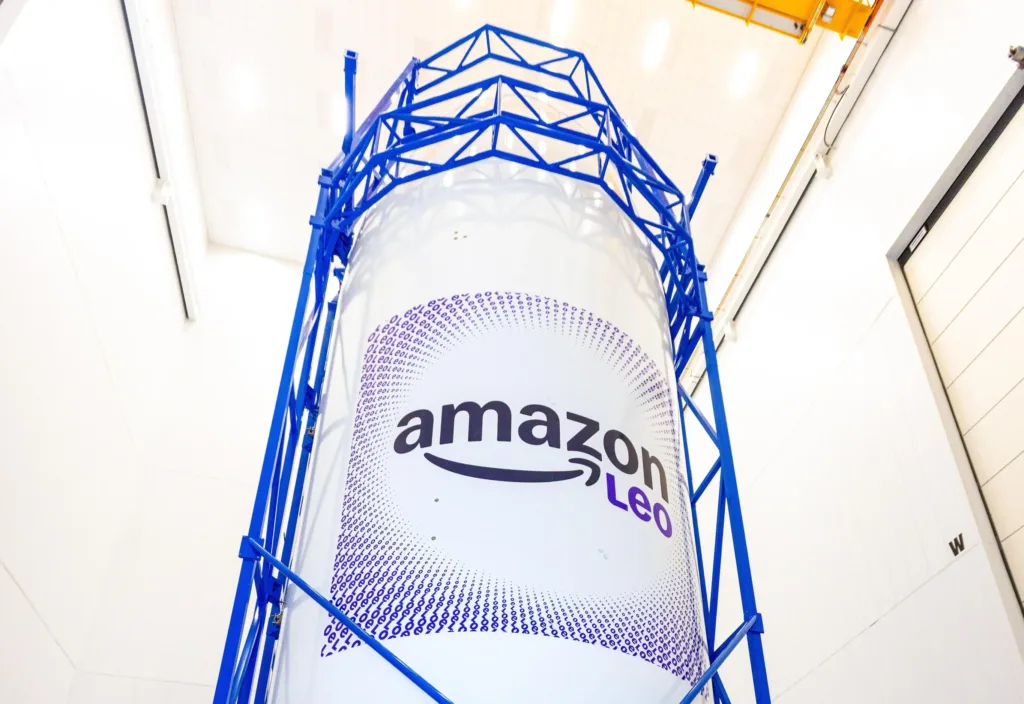
A large batch of Amazon Leo satellites to be loaded onto Blue Origin's New Glenn rocket. They never got the chance, due to an explosion during a test fire of the rocket. | Image by Amazon

Amazon Leo faces a major setback after the unexpected explosion of Blue Origin's New Glenn rocket on May 28 during a static test fire at its Florida launch pad. Blue Origin is calling the incident an anomaly. Still, the New Glenn is likely grounded for an extended period while a thorough investigation is conducted and the launch pad, which was severely damaged, is rebuilt. 

It's a setback for all space companies expecting to launch their satellites on the New Glenn, but especially for Amazon Leo, which had planned to launch its low-Earth orbit satellites on 24 Blue Origin flights over the next couple of years. The New Glenn can carry 48 Amazon Leo satellites, bringing the total to 1,152, which will need another means of getting to space.


Credit: Spaceflight Now

Grounded: How the this affects Amazon Leo

Amazon has aggressively accelerated its satellite internet initiative, aiming to build a 3,200-satellite constellation. As of June 2026, Amazon has successfully launched about 300 satellites.

To scale up, Amazon announced plans to double its launch cadence with 20 flights scheduled for 2026. This acceleration relies heavily on squeezing larger payloads onto heavier rockets from third-party partners, including Arianespace, the United Launch Alliance (ULA), SpaceX, and Blue Origin. 

Blue Origin, founded by Jeff Bezos, was expected to do much of the heavy lifting for Amazon Leo, but the explosion and aftermath will likely force them to make drastic changes to stay on track with their build-out, which has already faced extreme delays.

Scaling the constellation against the clock

Despite recent acceleration, Amazon's rollout has struggled to match the pace of established competitors. Amazon has attributed its slower cadence to "circumstances beyond its control." The primary structural barrier is the company's reliance on external partners to ramp up its heavy-lift vehicles (such as the Vulcan Centaur and New Glenn), which inherently limits how quickly Amazon can deploy its network compared to vertically integrated rivals.

Amazon is facing a strict Federal Communications Commission (FCC) deadline to have at least 1,600 satellites (half its planned constellation) operational in orbit by July 2026.

Because of its current pace, Amazon has formally appealed to the FCC, requesting either an extension on this deadline or a complete exemption. This request is currently pending an agency decision. The appeal has drawn direct opposition from SpaceX, which urged the FCC to deny the extension and force Amazon to redesign its rollout to prevent signal interference. Furthermore, FCC Chairman Brendan Carr has publicly noted that Amazon is severely behind schedule, underscoring the regulatory pressure the company faces as the July deadline approaches.

What's next for New Glenn and Amazon Leo?

"We will fly again before the end of this year," Blue Origin CEO Dave Limp said. The launch company plans to return aggressively as soon as possible after this incident, though it will take months. This leaves Amazon Leo with one fewer option for launching satellites, likely forcing it to pivot and reserve more rides with its other partners.   

With hundreds of satellites that Amazon Leo will be unable to launch as planned, the launch is likely to be delayed, depending on how it rethinks its launch strategy. Despite this, Amazon still insists its Leo service will launch sometime in 2026. To what extent is still up in the air.

Andreas Rivera
Written by
Andreas Rivera is a lifelong writer with a decade-spanning career in journalism and marketing. He comes to SatelliteInternet.com with several years of experience writing about business and technology. His passion for researching the latest advancements in tech, especially the now essential need for reliable internet access, fuels his goal of educating others about how these innovations affect and improve our everyday lives. When not researching and writing about SatelliteInternet.com, you’ll likely find him buried in a good book or enjoying the great outdoors with a fishing rod.