FCC Grants Amazon Leo a Lifeline on Satellite Rollout


Andreas Rivera
Jun 09, 2026
Icon Time To Read2 min read

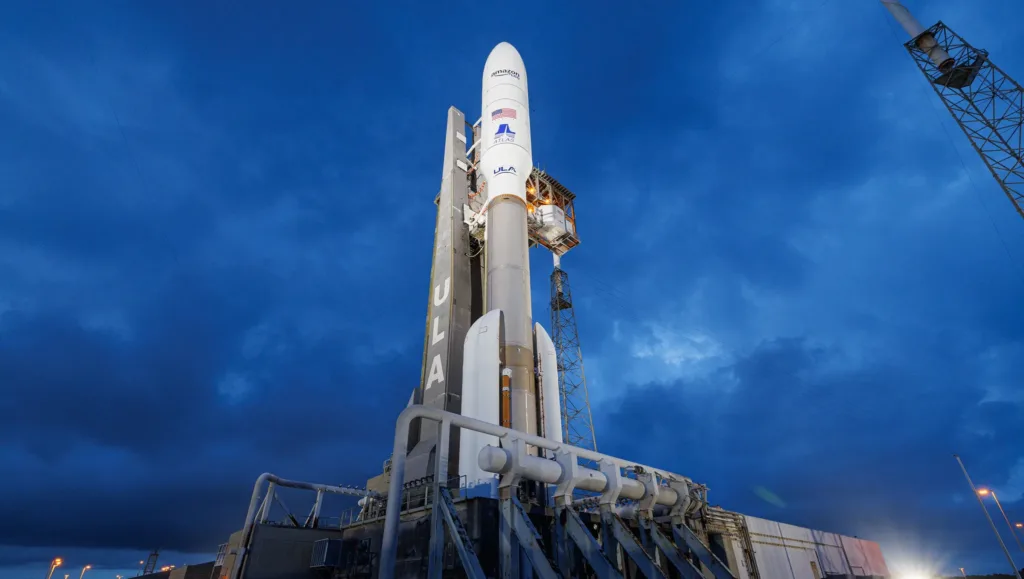
The Atlas V, loaded with a set of Amazon Leo satellites to be launched. Amazon will have to rely more on ULA's rockets to meet its goals | Image by ULA

Amazon Leo got some good news this week following a series of setbacks to its satellite internet rollout. The Federal Communications Commission (FCC) has granted a limited waiver to Amazon Leo, allowing the company to bypass its July 30, 2026, deadline to launch 50 percent of its first-generation satellite fleet (1,616 satellites). However, the extension comes with a caveat. The FCC will temporarily demote the spectral priority of any Amazon Leo satellites launched after the July 2026 deadline until the company reaches the original milestone, to incentivize the company to accelerate its deployment. 

Earlier this year, Amazon admitted it would fall far short of its 1,600-satellite milestone, projecting it would reach only about 700 operational satellites by July. As of June 2026, it has just over 300 satellites in orbit. Amazon requested the waiver earlier this year and blamed the delays on unforeseen delays outside its control.


Major setbacks and launch strategy

Amazon's deployment schedule suffered a massive blow on May 28, 2026, when Blue Origin's New Glenn rocket exploded on a Florida launch pad during a static-fire test. Amazon had heavily relied on Blue Origin with 24 flights booked on the heavy-lift vehicle. The incident, which is under investigation, has temporarily grounded the New Glenn, since its launch pad was also heavily damaged. 

The grounding of the New Glenn fleet eliminated Amazon's immediate ability to launch over 1,100 satellites, forcing the company to rely heavily on other launch partners like Arianespace and United Launch Alliance (ULA) to squeeze in more launches with heavier payloads to salvage its 2026 launch cadence. Since beginning its launches, Amazon claims it's had to contend with rocket shortages and partners shifting launches.

FCC grants extension despite SpaceX objections

Starlink's parent company, SpaceX, aggressively opposed Amazon's extension request, urging the FCC to deny it. SpaceX argued that Amazon should be forced to redesign its rollout to prevent signal interference with existing networks.

Imposing the loss of Amazon's priority status partially addresses SpaceX's complaint. Still, it will likely not affect Amazon much, since it has yet to officially launch any service beyond select beta testing. Amazon has been adamant that it will launch services in 2026, but has provided no details on the extent or how this stipulation could affect early services.  

About Amazon Leo

Amazon Leo, formerly known as Project Kuiper, is a low-Earth orbit (LEO) satellite internet network designed to rival SpaceX's Starlink. Rebranded in November 2025, the multibillion-dollar initiative aims to deliver high-speed, low-latency broadband to unserved and underserved communities worldwide. Customers will connect to the network via three tiers of user terminals: the compact Leo Nano, the standard residential Leo Pro, and the enterprise-grade Leo Ultra. The company eventually plans to operate a constellation of over 7,200 satellites.

Andreas Rivera
Written by
Andreas Rivera is a lifelong writer with a decade-spanning career in journalism and marketing. He comes to SatelliteInternet.com with several years of experience writing about business and technology. His passion for researching the latest advancements in tech, especially the now essential need for reliable internet access, fuels his goal of educating others about how these innovations affect and improve our everyday lives. When not researching and writing about SatelliteInternet.com, you’ll likely find him buried in a good book or enjoying the great outdoors with a fishing rod.