Starlink vs. T-Mobile: What is the Better Rural Internet Solution

Starlink
  • pro
    Price: $40.00–$120.00/mo.
  • pro
    Speed: Up to 400Mbps
  • pro
    Equipment costs: $349.00 (or free rental in select areas)
  • pro
    Availability: 99% of U.S.
T-Mobile
  • pro
    Price: $35.00—$55.00/mo. w/ Auto Pay and mobile plan
  • pro
    Speed: Up to 498Mbps
  • pro
    Equipment costs: None
  • pro
    Availability: 58% of U.S.

Andreas Rivera
Dec 02, 2025
Icon Time To Read7 min read

Starlink and T-Mobile 5G Home Internet have quickly become main rivals in the rural internet market. Both provide reliable, fast wireless internet connections and are available in many places without access to cable or fiber internet.

They're both similar in many ways:

  • They're easy to install and get online right away.
  • There are no commitments, so you can cancel service whenever you want without fees.
  • They both offer portable options to take high-speed internet on the road.

However, the two providers differ significantly. T-Mobile's availability and pricing (especially if you're a mobile customer) make it our recommended choice, but only in areas with good reception and speed. We recommend trying it to make sure—T-Mobile offers a 15-day trial with no upfront costs, so you've got nothing to lose.

Starlink is our preferred solution for the most remote parts of the United States. Plus, T-Mobile isn't immune to network outages. In contrast, Starlink has a history of a few outages as it expands its constellation of satellites. Its speed and latency are comparable to most ISPs, and the ease of use is also a plus. However, for reliability that's available anywhere, you'll pay more than most.

Read on for a more in-depth breakdown of the providers and what they do best.

Starlink vs. T-Mobile: Plans & Pricing

Starlink

Starlink plans and pricing

Plan
Price
Speed
Latency
Recommended Equipment fee
Starlink Residential$80.00—$120.00/mo.Up to 300Mbps30—40ms$349.00
Starlink Roam$50.00–$165.00/mo.Up to 260Mbps<99ms$299.00–$349.00
Starlink Local Priority$65.00–$540.00/mo.Up to 400Mbps30—40ms$349.00
Starlink Global Priority$250.00–$2,150.00/mo.Up to 400Mbps<99ms$1,999.00

Starlink's primary residential internet service is $120 per month. It's expensive compared to other service providers, but at least it doesn't come with any strings attached, such as a mandatory commitment or a contract. If you're not impressed, you can cancel at any time. The bigger hurdle for many will be the upfront cost of the hardware.

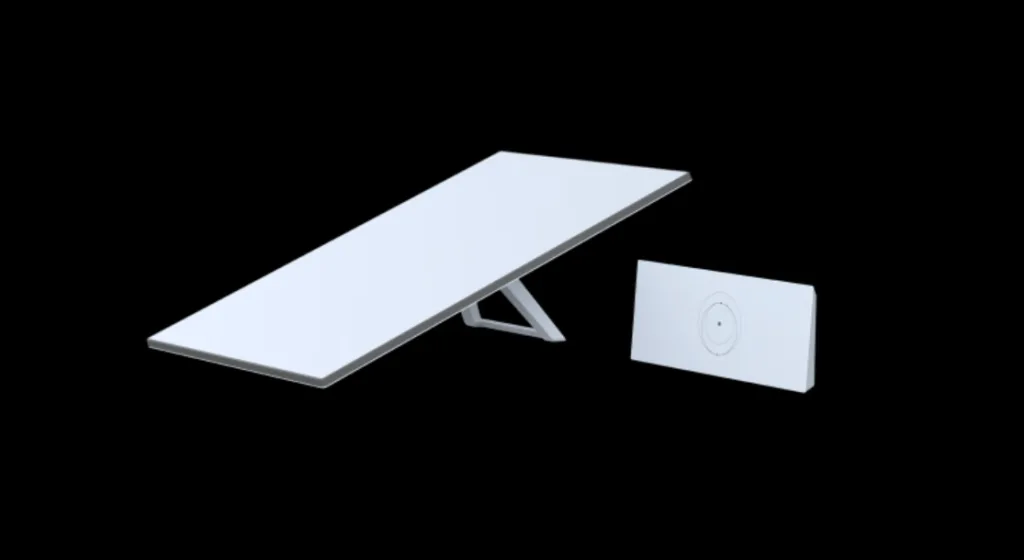
Unlike other providers that usually lease their equipment, Starlink requires you to buy the dish, accompanying router/gateway, and cables outright. The regular price for Starlink's standard kit is $349; however, Starlink often offers discounts in certain areas, so check whether your address qualifies for a reduced price.

In the first 30 days after activation, if you're unhappy with the internet quality or it isn't working in your location, you can return it to Starlink for a full refund. After 30 days, they will be unlikely to accept it. However, since you own the equipment, you can sell it and transfer ownership to someone else to recoup your costs.

Starlink offers several other plans for its many use cases, the most popular being its Roam service, which lets you connect to Starlink's network from anywhere in the U.S. and many international locations. The expensive Priority plans are typically marketed to businesses and offer the fastest speeds available within a data allotment.

T-Mobile 5G Home Internet Pricing

Plan
Reg. Price
Price w/ Voice Line
Download Speed
Features
T-Mobile 5G Home InternetRely Internet
$50/mo.$35/mo.Up to 318Mbps● Unlimited data
T-Mobile 5G Home InternetAmplified Internet
$60/mo.$45/mo.Up to 498Mbps● High-speed Wi-Fi
● 24/7 technical support
T-Mobile 5G Home InternetAll-In Internet
$70/mo.$55/mo.Up to 498Mbps● Wi-Fi mesh device
● Hulu and Paramount+ subscriptions included

T-Mobile offers its home internet through three plans: Rely Internet, Amplified Internet, and All-In Internet. Your monthly internet price will depend on a couple of factors, including whether you're already a T-Mobile customer for your mobile needs or plan to be one. Rely is cheapest when bundled with at least one mobile phone line, and you opt in for auto-pay. It's a pretty low cost, but requires a T-Mobile phone plan, which is also pretty affordable. If you're not interested in a T-Mobile phone plan or autopay, it's still more than half the cost of Starlink's Residential plan. Plus, there is no equipment cost.

Amplified Internet is the mid-tier plan that has improved speed and several additional features. The plan includes a higher-powered 5G router and advanced cybersecurity. The All-In plan includes everything others have, plus a Wi-Fi mesh device, making it ideal for larger homes with lots of users. 

Light Bulb

Bonus: Do you need wired, high-speed internet for work but can't afford an outage? T-Mobile offers a Home Internet Backup option for $10 to $25 per month.

Starlink vs. T-Mobile: Speed

Starlink Speed

Starlink's Residential plan with a standard dish can deliver surprisingly fast download speeds, often surpassing its expected top speed of 400Mbps. It's nowhere near the lightning speeds of fiber or even cable that can reach multiple gigabytes per second, but Starlink speeds are enough for most internet users. The speeds you get with Starlink depend on several factors, and it's not guaranteed to be the fastest, as with all wireless internet providers.

A huge factor is your location. Starlink has enough satellites now for global coverage. Still, if you happen to be in an area with lots of other Starlink users, then you're essentially competing with your neighbors for the bandwidth of the satellites above. Starlink and SpaceX's solution is to launch more satellites and offer priority data at a premium price.

T-Mobile 5G Home Internet Speed

T-Mobile's speeds depend entirely on your proximity to its expansive 5G cellular network. According to T-Mobile, customers can expect average speeds of 170 to 498Mbps.

Since your speed and quality are based on your location, it's not guaranteed you'll reach its top speed, but you may see even faster speeds. Determining whether you'll get anywhere close to their advertised speeds is essential, since you don't want to pay for something that doesn't work for your situation and needs. Speed test data from HighSpeedInternet.com shows an average of 111Mbps in the U.S. This is serviceable for most internet use cases, including email, streaming, and even online gaming.    

Starlink vs. T-Mobile: Availability

Starlink is readily available throughout most of the U.S., and anyone can buy a kit and activate the service. According to the FCC, Starlink provides 99.5 percent of coverage to the U.S. and is also usable throughout much of the world.

T-Mobile 5G Home Internet is also widely available throughout the country, with coverage in every state except Alaska. Its mobile network is known to be the largest, surpassing the other leading carriers, and this extends to its home internet service. However, its coverage is far from perfect, with gaps in the most rural parts of the country, especially in the West. It provides about 58 percent of coverage in the U.S., and certain areas have coverage but will have a weak signal. T-Mobile works in many rural locations, but Starlink outshines it in terms of availability. You can use our zip code tool to check whether your address is in T-Mobile's network.

Starlink vs. T-Mobile: Portable Internet

Provider
Price per month
Data
Download speed
See more
$50.00–$165.00Unlimited standard (prioritized behind other tiers)Up to 200Mbps
$110.00–$160.00200GB or Unlimited77–292Mbps over 5G

Starlink and T-Mobile offer portable versions of their internet services for RVs, campers, and nomadic lifestyles. Much of what applies to their residential internet also applies to these mobile options, though they are notably more expensive. Starlink Roam and T-Mobile 5G AWAY can be used anywhere in their respective coverage areas without being tied to a fixed address. Both can also be used while in motion, allowing passengers to enjoy high-speed internet on long road trips or while on boats. The trade-off is that mobile internet is prioritized lower than residential so that you can expect slower speeds than at home.

Read more about Starlink Roam and T-Mobile AWAY.

Starlink vs. T-Mobile: Reliability

Starlink and T-Mobile's reliability is a mixed bag. Most outages for individual customers are typically weather-related. Both depend on clear skies and no obstructions, so when it's overcast, raining, or snowing, performance will drop.

Power outages can plague T-Mobile's network. If you're in range of just a single cellular tower, and it suffers a power outage, then you're out of luck.

The Starlink satellite network still relies on ground infrastructure that can cause slowdowns. Still, even if the nearest ground station goes offline, the satellites will route your connection to the next one. Unfortunately, Starlink has limited options for customer support.

Unlike most providers, Starlink doesn't have a phone number, email address, or live chat for support. Support requests, whether it's about billing or technical issues, must go through the ticket system on the Starlink website or app. Before submitting the ticket, you need to interact with a chatbot that will attempt to resolve your issue by pointing you to a page on its help center. Most Starlink customers we've interviewed praise the service's speed and ease of use, but they were frustrated by the lack of support when they had issues.   

Like most mobile carriers, we've seen mixed reactions to T-Mobile's customer support. For instance, canceling the service requires making a phone  At least they have more options to reach out. T-Mobile 5G Home Internet Plus comes with 24/7 tech support that also helps with any questions you have about your devices

Starlink vs. T-Mobile: Equipment and Installation

Starlink currently offers three iterations of its dish with different features. We recommend the Standard kit, as it's best suited to residential and most portable use cases. The Mini is for those interested in an even more portable option and not home internet. The Flat, High-Performance dish is only valuable for mobile businesses, such as shipping freighters or airlines.

Another part of what makes Starlink unique is that installation is entirely in the customer's hands. The kits are engineered to be intuitive and work right out of the box. If you're looking for a more permanent installation in your home, you'll need some extra equipment and tools. Starlink sells mounts and longer cables but does not provide professional installation. Hiring third-party installers is possible, but from what we've seen online, they typically cost hundreds of dollars.

T-Mobile 5G Gateway (G4AR & G4SE)

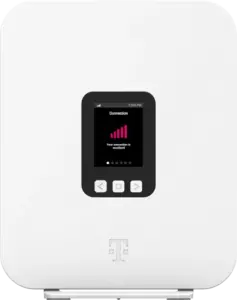
T-Mobile 5G Home Internet is light on equipment. All it requires is a small gateway device that you place in your home, which also serves as a Wi-Fi router. T-Mobile recommends putting the device near a window to maximize signal. Customers with larger homes should consider the Plus plan, which includes a higher-powered Wi-Fi device and a mesh device to extend your home network even further.

Starlink vs. T-Mobile: Data Caps

Both Starlink and T-Mobile's home internet plans feature unlimited data, so you don't have to worry about the possibility of overage charges. However, like any internet provider, unlimited data usually comes with caveats.

Since Starlink and T-Mobile moderate bandwidth on their networks, customers who use an excessive amount of data in a month will be slowed down by the ISPs. T-Mobile states that customers who use more than 1.2 terabytes of data within a month could be subject to slower speeds. Starlink also states it moderates bandwidth for heavy data users, but doesn't list a specific amount.

Satellite Internet vs 5G

How these two technologies work makes a difference in how they'll perform in your particular situation, and knowing how they work may help you decide what to do. Starlink delivers internet via thousands of low-earth orbit satellites. What makes it different from other satellites is the altitude at which they orbit, which significantly reduces latency and makes your internet much more responsive. It's still slower than wired cable and fiber, but the technology is still evolving, so there's room for improvement. For Starlink to work, it needs an unobstructed view of the sky. This can be a problem for homes surrounded by woods or mountains.

5G home internet works off the same mobile signal that your smartphone does. The wireless gateway features a stronger antenna that improves signal reception, acting as a permanent hotspot for your home. Like your smartphone, your signal strength is based on your proximity to your carrier's cellular tower.

Our Verdict

Today, we're fortunate to have multiple options for rural internet throughout the country. Starlink is the more expensive option, but its satellite service covers you basically anywhere in the United States, no matter how remote you are. Its performance is also exceptional, thanks to its lower latency, making it ideal for streaming and online gaming. 

When it comes to value, T-Mobile 5G Home Internet is the clear winner with its low-cost Rely plan and $0 equipment cost. Its customer support is also more responsive and reliable than Starlink's. However, while its reach covers a large portion of the country, it's not everywhere, and the more rural you are, the worse your signal and speed will be.

Andreas Rivera
Written by
Andreas Rivera is a lifelong writer with a decade-spanning career in journalism and marketing. He comes to SatelliteInternet.com with several years of experience writing about business and technology. His passion for researching the latest advancements in tech, especially the now essential need for reliable internet access, fuels his goal of educating others about how these innovations affect and improve our everyday lives. When not researching and writing about SatelliteInternet.com, you’ll likely find him buried in a good book or enjoying the great outdoors with a fishing rod.