How to Get Cell Service and Internet in National Parks (2026)


Mikayla Rivera
May 21, 2026
Icon Time To Read13 min read

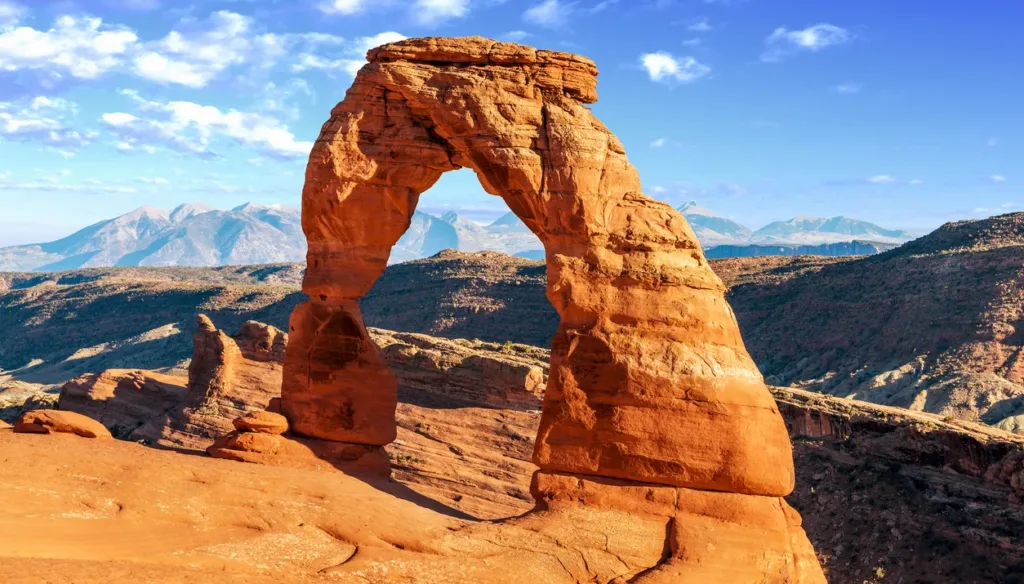
It's possible to get a reliable signal in remote locations, such as the national parks surrounding Moab, UT, using D2D and satellite internet. | Image by iStock

How to get cell service in remote areas?

You're typically off the grid when you venture into one of the United States' many gorgeous National Parks. However, if you need a reliable connection, most importantly for safety, but for entertainment at the campsite or checking work email on a long weekend, the game has completely changed.

Thanks to a massive revolution in space-based networks, you no longer have to rely solely on traditional terrestrial cell towers to stay connected in the wilderness. The future of off-grid communication is already here, driven by two major innovations: direct-to-device (D2D) satellite coverage that turns your everyday smartphone into an emergency satellite phone, and highly portable satellite internet options that bring high-speed Wi-Fi straight to your campsite.

While finding a standard cell signal with a top-tier provider like Verizon or T-Mobile is still great (and we've mapped out the best terrestrial coverage spots in your favorite parks below), you now have incredibly powerful backups. Whether you're a weekend hiker wanting the safety of satellite SOS in a dead zone or a full-time RVer looking to stream movies under the stars, here is everything you need to know about staying connected in the wild.
Direct-to-device satellite options

A massive revolution in direct-to-device (D2D) satellite coverage is currently transforming standard everyday smartphones into powerful off-grid communication tools. Multiple companies have built infrastructures in Earth's orbit that communicate directly with mobile phones, closing the gap between terrestrial networks and out-of-reach areas like national parks.

Apple iPhone & Globalstar

Apple kickstarted the direct-to-device revolution with the iPhone 14 lineup by introducing built-in satellite connectivity powered by the Globalstar satellite network. Originally launched as a basic Emergency SOS tool, your iPhone has become a surprisingly capable off-grid companion with recent iOS 18 updates.

  • Emergency SOS & Find My: Connects you to emergency dispatchers, transmits your medical ID, and lets you update your location via satellite to let loved ones know you made it to camp.
  • Messages via Satellite: You no longer need to be in a life-or-death emergency to text from the wilderness. You can iMessage friends and family directly from your standard app using end-to-end encryption.
  • Roadside Assistance: Apple has partnered with AAA to help you get a tow or a jumpstart when stranded on a remote dirt road.

As of summer 2026, Apple includes these features for free.

Starlink Direct to Cell & T-Satellite

While Apple relies on built-in software, the mobile industry is shifting toward carrier-provided "Direct to Cell" technology. Leading the charge is T-Satellite, born from a partnership between T-Mobile and SpaceX's Starlink. Starlink's satellites act like orbiting cell towers. If you lose a terrestrial signal in a park, your standard LTE-enabled phone automatically connects to Starlink.

  • Text and Basic Data: Currently supports SMS, WhatsApp, and essential apps such as Google Maps and AllTrails.
  • Universal Safety: All T-Mobile customers can use T-Satellite to send free emergency 911 texts, regardless of their plan.
  • Pricing: T-Satellite is automatically included for T-Mobile customers on the top-tier Experience Beyond plan. For other T-Mobile plans—and even compatible AT&T and Verizon customers with an open, unlocked eSIM slot—it can be purchased as a flexible $10/month add-on.

What about AT&T and Verizon?: AST SpaceMobile

If you are an AT&T or Verizon customer patiently waiting for your carrier to fully catch up, keep your eyes on Texas-based startup AST SpaceMobile. Stepping up as Starlink's primary direct-to-cell rival, AST SpaceMobile uses massive, high-powered low Earth orbit (LEO) satellites to serve as giant cellular towers in the sky. Backed by AT&T and Verizon and targeting a commercial launch around 2026, the service will use the same radio waves as standard 5G networks to deliver text, voice, video, and broadband data directly to unmodified smartphones.

Best RV internet options for National Parks

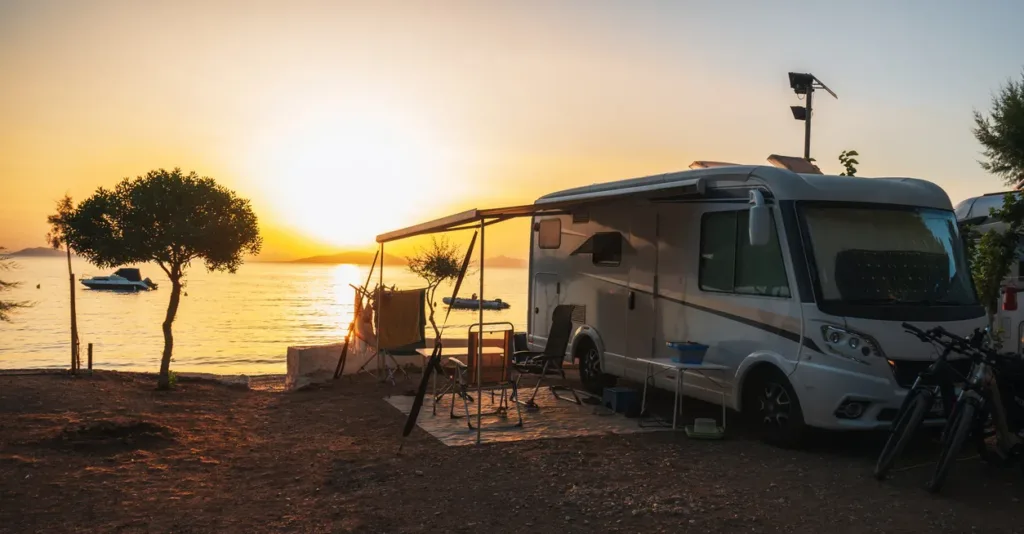
If you are traveling in an RV and need reliable Wi-Fi at your campsite, standard cell service might not cut it for heavy remote work or streaming. Here are the top RV internet options to keep you connected in and around the parks.

Starlink Roam

Starlink Roam connects to SpaceX's constellation of low Earth orbit (LEO) satellites to deliver high-speed, low-latency internet (up to 300 Mbps) pretty much anywhere, no matter how far from civilization you go.

  • The Plans: Roam 100GB ($55/mo), Roam 300GB ($80/mo), and Roam Unlimited ($175/mo). There are no annual contracts, and you can pause your service at any time.
  • The Hardware: You buy the equipment upfront. Options include the Standard dish, the Flat High-Performance dish, and the highly portable Starlink Mini. The Mini is half the size and weight of the standard dish, features a built-in Wi-Fi router, and is incredibly power-efficient (a 100W USB-C laptop power bank can even power it).
  • Best for: Remote boondocking, off-grid camping, and full-time RVers who require reliable internet anywhere the sky is visible.

T-Mobile AWAY

T-Mobile AWAY is a flexible version of T-Mobile's 5G Home Internet service that lets users connect wherever the carrier's network reaches. It uses a 5G gateway device, meaning there are no expensive upfront satellite equipment fees.

  • The Plans: 200GB for $110/mo (with AutoPay) or Unlimited for $160/mo. You can pause the service for up to 90 days for just $10/mo.
  • The Hardware: The 5G gateway plugs into a standard 100–240V household electrical outlet. If you're off-grid, it can easily run off a basic 100-watt DC power inverter plugged into your RV's 12V socket, or a portable 100W USB-C power bank.
  • Best for: Digital nomads and weekend warriors who stick mostly to populated routes, front-country campgrounds, and areas with existing cellular infrastructure.

Guide for cell and internet access in National Parks

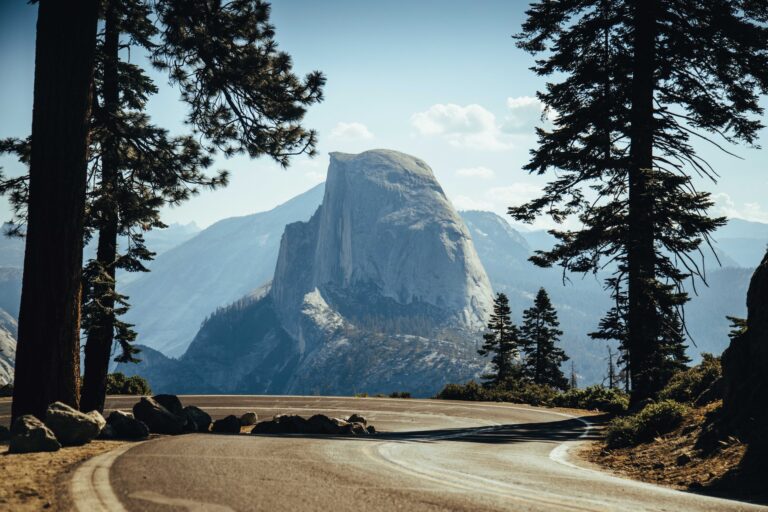
Cell Phone Service In Yosemite California | Satelliteinternet.com

Is there cell service in Yosemite?

Yosemite, like most national parks, is filled mostly with dead zones. However, there are three major places where Yosemite campers and explorers report good cell signals: Yosemite Valley, Tuolumne Meadows, and Yosemite Village, located near the Visitor Center. Of course, bad weather could interfere with your reception even at these locations.

Here's a breakdown of cell service in Yosemite by mobile provider.

Verizon Wireless cell service in Yosemite

Verizon Wireless offers the best cell coverage in Yosemite.

The National Park Service operates in Yosemite Valley, Foresta, Crane Flat, El Portal, Wawona, and Tuolumne Meadows—though Tuolumne Meadows has the least reliable Verizon connection.

AT&T cell service in Yosemite

AT&T has the second-best cell coverage in Yosemite. You can access at least some level of internet data in Yosemite Valley (the eastern part, mostly) and Tuolumne Meadows. However, keep in mind the speeds aren't very fast.

T-Mobile cell service in Yosemite

T-Mobile has the least amount of cell coverage in Yosemite National Park. You can only get a T-Mobile signal in Yosemite Valley, though it's worth noting that you can get 4G, whereas AT&T can only get 3G.

Still, we'd suggest going with Verizon instead if you can swing it. It'll be safer for you and your family to have as many cell service pockets as possible.

Yosemite Wi-Fi

Wi-Fi access in Yosemite is restricted to the hotels surrounding the park and in Mariposa County library branches, not in the park itself. But if you suddenly need Wi-Fi while you’re in, around, or near Yosemite, you might be able to use these networks.

We’d first recommend hopping over to Degnan’s Kitchen, which is both a good place to eat and a free Wi-Fi hotspot. But if you’re in need of a computer as well, your best bet is one of the Mariposa County library branches in either Yosemite Valley or Wawona.

Yosemite Valley Lodge, The Ahwahnee, Curry Village, and Wawona Hotel also have Wi-Fi available to their overnight guests. However, if you’re not a guest at one of these places, you’ll want to try some of the aforementioned public internet access points instead.

Do Yosemite campgrounds have Wi-Fi? (PAA)

There are certain campsites around Yosemite that offer Wi-Fi access, but remember it’s likely to be via satellite. Because of the connection type, they’re bound to be a bit slower than you’re used to at home.

That said, Yosemite Pines RV Resort and Family Lodging offers Wi-Fi at its cabin, RV, and tent sites, as well as in retro trailers, Conestoga wagons, and yurts near Yosemite National Park. Unfortunately, this Wi-Fi access isn’t free. You’ll need to pay the following (fairly low) fees to get Wi-Fi at Yosemite campgrounds.

Those costs are also per device, so if it’s just you, it’s not too expensive. But if you're trying to get your whole family connected, we suggest just picking one phone and one tablet (to keep the kids entertained, of course) between your group to keep costs down.

Joshua Tree Cell Service

You can find cell service in Joshua Tree National Park, but it’s more of a hunt. The vast majority of Joshua Tree will have no signal, but we've collected a handful of spots where experienced hikers have found cell service.

You'll notice in the following lists that the best place for cell phone service across the board is the Oasis Visitor Desert Institute. So if something goes awry and you need to make a call, you should head there.

Verizon cell service at Joshua Tree

  • Oasis Visitor Desert Institute
  • Keys View
  • Boy Scout Trailhead
  • Indian Cove
  • Jumbo Rocks section
  • Park Boulevard

Verizon has the best coverage in Joshua Tree, with reception in more areas than its competitors. Any mobile phone service provider will have unstable service in wilderness areas like these.

We always recommend taking a satellite phone with you, especially if you're planning to climb rocks or go on a deep adventure. Sadly, motor vehicle crashes and falls cause 800+ deaths per year in national parks.2

AT&T coverage at Joshua Tree

  • Oasis Visitor Desert Institute
  • Indian Cove
  • Park Boulevard (to the west of Hidden Valley Campground)
  • Jumbo Rocks section (the area including Sky King Rock along the campground)

AT&T has the second-best coverage in Joshua Tree, so you should be alright if this is your provider. Verizon has it beat by two locations, but if you're planning to stay in the Jumbo Rocks section of the park, you won't need to worry about service.

T-Mobile cell service at Joshua Tree

  • Oasis Visitor Desert Institute
  • Keys View
  • Park Boulevard

T-Mobile has the weakest cell coverage in Joshua Tree. You can expect to get a signal in these three locations across Joshua Tree, but you'd be better off with Verizon in this national park.

Is there cell reception at Indian Cove Campground?

Cell service at Indian Cove Campground will be spotty and unreliable, but Verizon and AT&T users may get a signal. Indian Cove Campground does not provide Wi-Fi, for the record.

Is there cell service at Jumbo Rocks Campground?

Both Verizon and AT&T customers can often receive cell signals around the Jumbo Rocks section of Joshua Tree and its local campground. But remember that cell service isn't stable throughout Joshua Tree, so don't rely on it here.

If you have an iPhone 14, using your satellite phone service would be a more reliable backup at Jumbo Rocks Campground and everywhere else in Joshua Tree National Park.

Is there cell service in the Grand Canyon?

You can get Verizon, T-Mobile, and AT&T cell coverage in the Grand Canyon, but it’s more stable in the south rim areas. You can access all three carriers in the south rim area, especially in the Grand Canyon Village area, where there’s more infrastructure.

The north rim of the Grand Canyon, however, is where most carriers’ signals cut out and become spotty, if you can get them at all. Verizon and AT&T are the most likely to get you a cell signal in this area, but we wouldn’t depend on it. If you’re a T-Mobile user, we’d be surprised if you got any signal at all.

If you’re planning on hiking down in the Grand Canyon itself, we highly suggest leaving your cell phone behind and bringing a satellite phone instead. A satellite phone doesn’t rely on cell service, so you can stay connected to loved ones for their peace of mind, as well as GPS to stay safe during exploration.

Yavapai Lodge Wi-Fi

There is no Wi-Fi in the Yavapai Lodge's rooms (though we can attest firsthand that they are very comfortable). However, the Yavapai Lodge itself, where guests check in, offers satellite internet service—but it's not very good.

When we were staying there a few years ago, we needed internet access to send reports, but once connected, the service acted as if it weren't. We worked with the woman at the front desk, but the Wi-Fi at Yavapai is known to be spotty and unreliable.

Fortunately, our reports could wait, so we were okay—but if you know you have a deadline, don't go in expecting easy Wi-Fi to answer emails and the like. Instead, use it as an excuse to disconnect and enjoy the beauty of the Grand Canyon truly.

Is there cell service in Yellowstone?

As with all national parks, any cell service you get in Yellowstone will be unreliable—that's part of the splendor. But worry not, cell phone service is available in over 50%3 of Yellowstone National Park, thanks to the six cell towers set up in the surrounding areas.

You should be able to get Verizon and AT&T cellular service in the following areas of Yellowstone National Park, with Verizon beating out AT&T for the best signal in most:

  • Mammoth Hot Springs
  • West Yellowstone
  • Old Faithful
  • Grant Village
  • Lake Village
  • Mount Washburn
  • North and West entrances

You may also find other areas with cell service in Yellowstone, beyond those confirmed above, as cell service continues to expand. But it's important to be ready to find large areas with spotty, unreliable, or nonexistent service.

Wi-Fi in Yellowstone National Park

You can technically get Wi-Fi in Yellowstone National Park, but it is only available in Yellowstone National Park Lodges and similar places to stay.

Important note: in these rural areas, internet access is "limited to one device at a time, per room," 4 according to the Yellowstone National Park Lodge's website. We suggest downloading any movies you plan to watch after a day of adventuring before you arrive.

Here's a list of places in Yellowstone where you can rely on getting an internet connection, though not all have Wi-Fi:

  • Mammoth Hot Springs Hotel
  • Canyon Lodge
  • Washburn Lodge
  • Grant Village
  • Guest room lodges
  • Lake Lodge
  • Lake Yellowstone Hotel (no Wi-Fi, wired only)
  • Old Faithful Lodge
  • Old Faithful Snow Lodge

Some of the above places have Wi-Fi or Ethernet connections available in guest cabins and public areas, while others only offer internet in public areas. We recommend double-checking your desired stay's website before heading out.

Is there cell service in Grand Teton National Park?

Grand Teton National Park has two cell towers, so cell service is available in the more developed areas of the park, such as Jackson Hole Valley, Jenny Lake, and Flagg Ranch. You won't find much reliable cell service outside of that since Grand Teton's backcountry is incredibly remote. In fact, the cell service blackout in the mountain range is what a lot of people come for. 

Cell service in Glacier National Park

Glacier National Park, nestled in the far reaches of Montana, has some of the worst reception among the national parks.

You'll find somewhat reliable cell service in Glacier in only two areas:

  • West Glacier to Apgar Village
  • Mary (limited)

A lack of cell service is exactly what some people are looking for when they travel up this way. If you're used to a more connected way of life, we suggest reminding your loved ones they're unlikely to reach you while you're adventuring. Another option is to get a satellite phone (or use your iPhone 14's satellite capabilities) to make sure you can still update them as needed.

Wi-Fi in Glacier National Park

Wi-Fi is available in the public lobby areas of all Glacier National Park lodges and in Glacier's two visitor centers, including these locations:

  • Apgar Visitor Center
  • Mary Visitor Center
  • Many Glacier Hotel
  • Swiftcurrent Motor Inn & Cabins
  • Rising Sun Motor Inn & Cabins
  • Lake McDonald Lodge
  • Village Inn at Apgar

Remember that because of the location, Wi-Fi will be slow and spotty even when it's available. We suggest downloading any entertainment you plan to access on your devices before you head out on your adventure.

Is there cell service in Arches National Park?

You should be able to get Verizon 4G LTE service in most of Arches National Park. However, the farther northwest into the park you go (away from the entrance and where cell towers exist outside the park), the weaker and spottier your signal is likely to be from any carrier.

Here are some places you can usually get a signal from most mobile carriers:6

  • Arches Visitor Center
  • Balanced Rock
  • Panorama Point
  • Delicate Arch
  • Salt Valley Overlook
  • Fiery Furnace Viewpoint

Is there Wi-Fi in Arches National Park?

There is no public Wi-Fi at Arches National Park, but you can get it at public facilities in Moab (like the library or local hotels), just down the road from the park's entrance.

Is there cell service in Moab?

You'll surely have better cell service in Moab than in Arches, particularly if you have Verizon, which offers 4G LTE in the area. Speeds will likely be slower on any mobile carrier, so don't expect lightning-fast 5G in a more remote town like Moab.

Is there cell service in Zion National Park?

You can get solid cell reception (for a national park) in Zion, particularly toward the front of the park. It's also possible to get a signal in the surrounding town of Springdale and in the Zion Lodge, where many adventurers stay the night. You'll even get Verizon 5G speeds the closer you get to Springdale. But once you get to the backcountry of Zion, wave your cell service goodbye.

The best places to get cell service in Zion National Park are the rugged terrain's natural high points:7

  • Angels Landing
  • Observation Point
  • Upper East Canyon peaks
  • Left Fork Trailhead
  • Hop Valley Trailhead

Zion National Park has deep canyons, and with canyons come solid stone walls that block out all cell service. We recommend a satellite phone to stay connected, especially if you're hiking in remote or dangerous areas.

Is there Wi-Fi in Zion National Park?

The Zion National Park Lodge, Zion Canyon Visitor Center, and the Human History Museum all offer free public Wi-Fi. Well, the Zion Lodge offers its Wi-Fi only to guests, but it's free for those overnight visitors.

Again, Wi-Fi in remote locations like this exists, but it doesn't provide the high-speed internet connection you're used to. Sometimes it'll cut out, be so spotty you can't connect, or so slow you'll suddenly understand the pain early internet users experienced.

If you want to binge Netflix in your hotel room after a hard hike, we suggest downloading content to your device beforehand.

Is there cell service in Bryce Canyon?

Bryce Canyon does have cell service, but it's limited throughout the park. Bryce Amphitheater and the Visitor Center have the most reliable signal.

Verizon offers 5G and 4G LTE speeds in the Bryce Canyon area (where the signal is present). But even better speeds and wider coverage in Bryce are on the horizon. Verizon Wireless, South Central Utah Telephone Association, and Garkane Energy Cooperative plan to install a 60-foot cell tower disguised as a pine tree in Bryce's Science Hill area.7

If you go hiking down into the canyon itself, expect your signal to cut out, becoming spotty or nonexistent. Cell signals have a hard time piercing through the solid towers and walls of stone you'll be exploring.

Why is there no cell service in national parks?

There is cell service in national parks, but coverage is spotty because it relies on cell towers. These towers are typically outside of national park acreage. But the limitation on cell towers—and therefore distant cell signal—is part of what keeps the parks pristine and beautiful.

Fortunately, you can also replace many safety features of cell phone coverage with satellite phones, since they don't need cell tower signals to function.

More cell service is coming to many of the most popular national parks. For instance, Bryce Canyon and Grand Teton National Parks are allowing (or considering) cell tower and fiber-optic installations in the parks, under specific conditions. So if you're worried about having no cell service in national parks, you might need to wait out the construction to support it.

Endnotes

  1. Cairn, “Cell coverage at Joshua Tree National Park,” January 2017. Accessed February 2023.
  2. PANISH, SHEA, BOYLE, RAVIPUDI LLP, “An Analysis of Deaths in U.S. National Parks,” October 2022. Accessed February 2023.
  3. Yellowstone National Park Trips, Gloria Wadzinski, “Do Cell Phones Work in Yellowstone? Is There WiFi?” December 2019. Accessed February 2023.
  4. Yellowstone National Park Lodges, “In-Park Internet Service.” Accessed February 2023.
  5. Associated Press, Mead Gruver, “Grand Teton National Park pursuing disputed cell-tower build,” March 2019. Accessed 2023.
  6. National Park Service, “Goods & Services,” July 2021. Accessed February 2023.
  7. NPS, Vanessa Lacayo, “Bryce Canyon New Cell Tower Decision Signed,” July 2020. Accessed February 2023.
Mikayla Rivera
Written by
Mikayla Rivera has worked as an editor for nine years on websites like Reviews.org, HowtoWatch.com, and CableTV.com. As someone who grew up with little to no internet access, she knows how vital it is for education, work, and even play. She’s now determined to help readers get reliable internet speeds, wherever they live. Her passion for internet accessibility, memes, and ethical marketing is rivaled only by her dedication to The Chicago Manual of Style. When Mikayla isn’t managing SatelliteInternet.com, she’s writing novels of her own.