

Staying connected to the internet while living and working in a rural location is challenging.
Your Guide to High-Speed Rural Internet Solutions

The demands of modern internet use require faster speeds and reliable connectivity, but choices for homesteaders are limited, often too slow and much too expensive. That’s why SatelliteInternet.com investigates rural internet solutions to help you pick the best internet provider to fulfill your needs for the best value.

SpaceX’s internet service uses advanced satellites to deliver the highest performance and lowest latency.

Hughesnet offers budget-friendly satellite internet plans, with reduced pricing for the first year of service.

Viasat internet offers an unlimited, month-to-month plan with decent speeds available virtually anywhere in the U.S.

T-Mobile has the largest 5G network, which extends to its home internet service, delivering signal no matter how remote you live.

Verizon’s 5G internet service can deliver speeds up to 1,000 Mbps, with coverage across most of the U.S.

AT&T keeps things simple by offering one 5G home internet plan with straightforward pricing and no contract.

Earthlink works to determine the best type of connection for your rural home, whether it's fixed-wireless, fiber, or satellite.

Amazon’s upcoming satellite internet service aims to deliver reliable, high-speed internet using advanced technology, leveraging AWS.
Internet tech types explained

Satellite internet
The most widely available internet connection. Utilizes orbiting satellites to bridge customers to the internet.
5G, fixed-wireless internet
A wireless connection using cellular signals. Widely available anywhere cell service is available.

Cable/DSL
Traditional internet connections that use previously built infrastructure, like coaxial cable or phone lines. Widely available, but speeds are limited.

Fiber
The fastest and most reliable connection to date, which uses specialized cable to transmit data. Requires new infrastructure, which limits availability.
What’s the right internet solution for you?
Satellite internet can be used anywhere in the country, but higher prices and inconsistent reliability means it may not be for everyone. Enter your zip code to compare all the options in your area.
Top articles about rural internet
The Best Rural Internet Providers
The best internet options for rural areas are satellite internet, mobile wireless, or DSL based...
Best Off-Grid Internet Options
Trying to get internet in the middle of nowhere? Our in-depth guide to getting internet...
The Best Farm Wi-Fi Solutions (2026)
The latest innovations in farming include sensors to monitor weather conditions, control irrigation, GPS to...
The Best Satellite Internet Providers of 2026
Starlink vs. HughesNet vs. Viasat. Uncover the pros and cons of each provider, compare speeds,...
Finding affordable rural internet
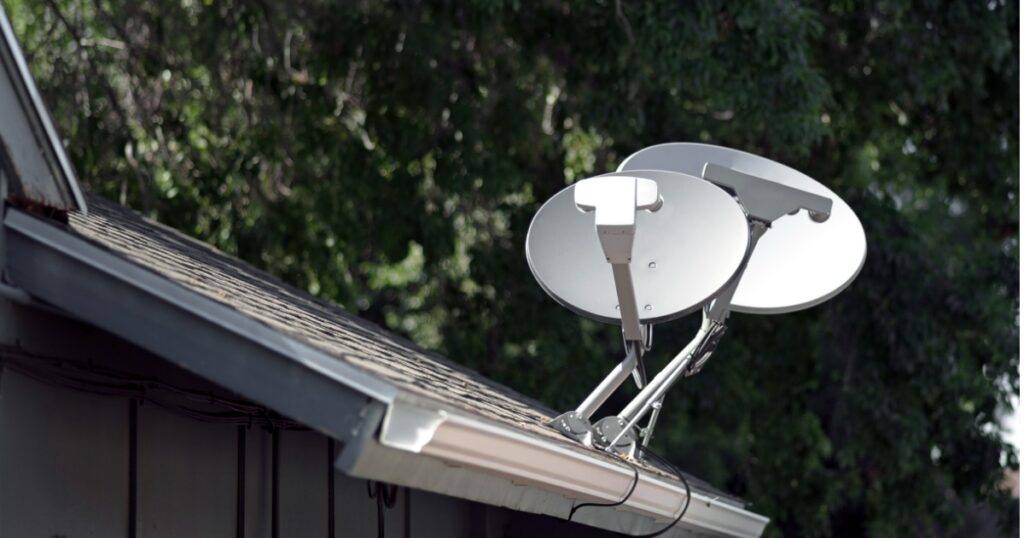
Cheapest Satellite Internet Plans of 2026 (Under $50/Mo)
What are cheapest possible satellite plans out there today? Hughesnet $39.99/mo. for 3 mo. Up...

Internet for Low-Income Families
Learn more on how to get internet access for low-income families, seniors, and students from...

Internet for Seniors
Our guide explores the best internet options for seniors, including tips for getting started, choosing...

Internet Options for American Indian Lands
Discover internet options available to American Indian lands, including satellite internet, fixed wireless internet, and...
Troubleshooting rural internet

5 Reasons Why Your Satellite Internet Is Slow—and How to Fix It
If you're suffering from a slow connection, there may be some solutions. Here's how you...

How to Stop Buffering: Learn to Prevent Internet Video Buffering Issues
End the frustration with our comprehensive guide on how to stop buffering. Unlock practical tips,...

How Much Internet Speed Do I Need?
Is your home internet fast enough for your needs? Find out what internet speed you...

How Much Internet Data Do I Need? A Comprehensive Guide
Sometimes, it’s easy to forget how much data we use with our home internet and...
Rural Internet FAQs
Latency is the measurement of time it takes for data to travel between a user’s endpoint (your computer or phone) to a destination on the internet (website, streaming service, online game). It’s measured in milliseconds.
Latency is relevant to rural internet users because most solutions, such as satellite and fixed-wireless, tend to have higher-than-average latency, making them seem slower and less responsive.
When shopping for an internet provider, look for solutions and plans with low latency.
Heavy weather can interfere with satellite and wireless internet solutions. Rain, snow, or heavy cloud cover weakens signals, but technology is improving to prevent complete outages.
Geostationary orbit (GEO) satellite services utilize a handful of satellites in high orbit to deliver an internet signal to a wide area. However, this technology suffers from high latency internet due to the distance data must travel.
There are thousands of low-earth orbit (LEO) satellites. They orbit much closer to the planet, so they have less broadcast range, but they make up for this with their numbers. They also have lower latency, making for a more responsive internet signal. Learn more about how satellite internet works.
Most rural internet providers either lease equipment or include it in the cost of your plan.
There are a few exceptions in which providers give you the option to purchase equipment outright or require it. An example is Starlink, which has a rental option in certain places, but typically sells its dishes and routers for up to $349.
The only nationwide program currently available is Lifeline. It’s a federal program that gives qualifying households up to a $9.25 discount on their monthly internet subscription from select providers.
Households on Tribal lands can qualify for a $34.95 discount. Learn more about qualifications here.
Some states and individual providers offer programs for low-income households, so when shopping, be sure to ask whether any are available and how to qualify.
Fortunately, it doesn’t require that much speed to stream on most platforms. We recommend at least 40Mbps for HD video streaming, especially if you have a household with multiple people streaming.
The optimal speed is at least 100Mbps if you want 4K streaming and multiple devices in the home using the internet. Also, look for low-latency internet to avoid constant streaming buffering.

 Your Privacy Choices